Sideways Close-Up Portrait
The Prompt
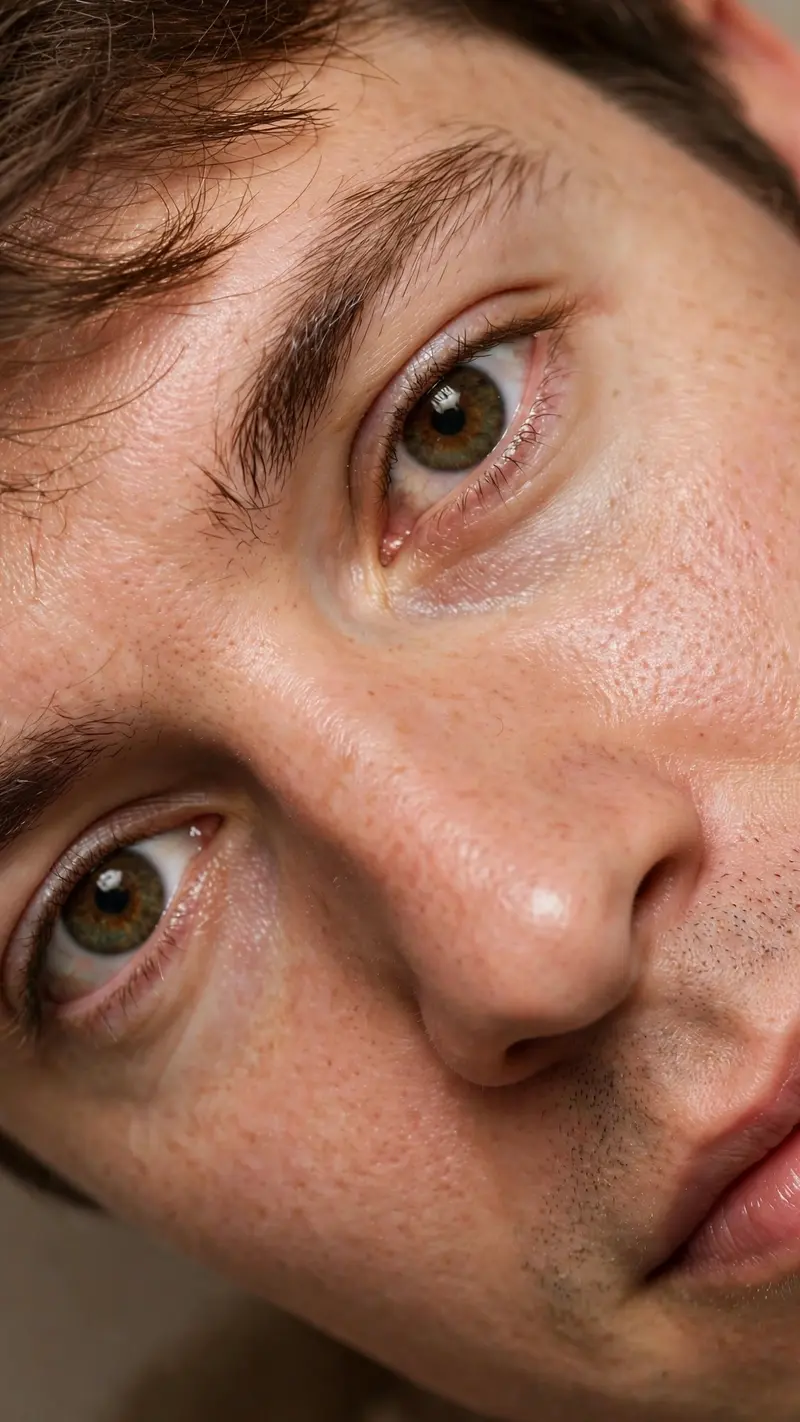
Use the uploaded photo of the person as a STRICT IDENTITY REFERENCE and recreate the portrait in the exact visual style, composition, camera angle, and framing described below. IDENTITY — HIGHEST PRIORITY Preserve the person’s exact recognizable identity from the uploaded photo. Keep their original facial structure, face shape, forehead, eyebrows, eye shape and color, eyelashes, nose shape, lips, cheeks, jawline, skin tone, natural skin texture, hairline, hairstyle, hair color, and every unique facial characteristic. Do not change, beautify, redesign, replace, age, slim, reshape, enlarge, or otherwise alter the person’s identity. The final result must clearly look like the same person from the uploaded photo. COMPOSITION Create an ultra-realistic extreme close-up portrait where the person's face fills almost the entire vertical 9:16 frame. Rotate the face approximately 90 degrees sideways, creating the distinctive diagonal composition of the reference style. The camera is extremely close to the face. Both eyes, the nose, eyebrows, eyelashes, cheeks, part of the lips, forehead, and surrounding hair should be visible. The eyes must be the primary focal point, with the nose occupying the central portion of the composition. Crop the face very tightly, with almost no background visible. The final composition should look like a spontaneous flagship-smartphone macro photograph, not a studio portrait. EYES — MOST IMPORTANT Both eyes must be extremely sharp and highly detailed. Preserve the person's original eye shape, size, color, eyelids, and natural proportions. Show realistic: - detailed iris patterns - natural pupils - glossy eye moisture - individual eyelashes - realistic eyelid folds - subtle natural veins - authentic catchlights - reflections of the surrounding environment - natural wetness along the lower eyelid Do not make the eyes larger, brighter, more colorful, or more symmetrical than they naturally are. FACE & SKIN Preserve the person's authentic skin tone and natural facial texture. Show realistic pores, tiny imperfections, fine facial hairs, subtle highlights, natural shadows, and realistic skin texture. The skin should have a slightly dewy natural appearance, with soft highlights on the nose, cheeks, and forehead. No excessive skin smoothing, whitening, airbrushing, or beauty-filter effect. HAIR Preserve the person's exact hairstyle, hairline, hair color, length, texture, and natural parting. Because of the extreme camera distance, individual hair strands should be clearly visible across the forehead and around the edges of the face. Hair should look naturally arranged, slightly overlapping the forehead just like a real close-up photograph. NOSE & FACIAL FEATURES Keep the person's original nose structure, nostrils, lips, cheeks, eyebrows, and facial proportions completely unchanged. The nose should appear naturally large in the composition because of the extremely close camera distance — do not artificially enlarge or redesign it. Keep all facial proportions anatomically realistic. EXPRESSION Use a calm, natural expression with the eyes looking naturally toward the camera. Do not add a smile or exaggerated emotion unless it is already present in the identity reference. The expression must remain subtle and realistic. LIGHTING Use soft, warm natural indoor lighting. Create realistic highlights across the forehead, nose, cheeks, and eyes. Add subtle reflected light inside both eyes. Use gentle natural shadows around the eyelids, nose, and facial contours. Avoid harsh studio lighting, dramatic colored lighting, or artificial beauty lighting. CAMERA & PHOTOGRAPHY Ultra-realistic macro portrait photography. Flagship smartphone camera quality. Extremely close focusing distance. High optical detail. Natural depth of field. Sharp eyes with realistic optical falloff toward less important facial areas. Natural exposure. High dynamic range. Realistic skin rendering. Authentic photographic imperfections. 4K/8K photorealistic detail. The final image must look like a real photograph captured with a premium smartphone camera at extremely close range. COLOR GRADING Natural warm skin tones. Realistic dark hair. Subtle contrast. Natural highlights. Authentic photographic colors. Slightly warm and soft overall appearance. No excessive saturation. No artificial HDR. No cinematic color grading that changes the person's natural complexion. FRAMING 9:16 vertical aspect ratio. Extreme close-up. Face fills approximately 90–95% of the frame. Both eyes prominently visible. Eyes positioned along the central diagonal composition. Very minimal background. The result should closely resemble the tight sideways eye-and-face framing of the provided reference image. REFERENCE IMAGE RULE Use the uploaded person's image ONLY for identity. Use the provided close-up reference image ONLY for composition, camera angle, crop, lighting style, and photographic framing. Do not copy the reference person's facial features, eye color, nose, lips, skin characteristics, or identity. The final image must contain the uploaded person's identity while reproducing the reference image's extreme close-up photographic composition. NEGATIVE PROMPT different person, changed identity, face swap, facial redesign, altered facial structure, beautified face, beauty filter, plastic skin, airbrushed skin, excessive smoothing, skin whitening, enlarged eyes, redesigned eyes, changed eye color, altered nose, altered lips, slimmer face, different jawline, different hairstyle, different hairline, distorted eyes, asymmetrical eyes, extra eyes, duplicate facial features, deformed nose, unrealistic eyelashes, fake iris, artificial eye reflections, CGI, 3D render, cartoon, anime, illustration, artificial skin, excessive HDR, oversharpening, blurry eyes, low resolution, unrealistic lighting, heavy makeup, exaggerated expression, unnatural proportions, AI artifacts. FINAL PRIORITY: Identity accuracy > facial realism > composition > lighting > artistic styling.